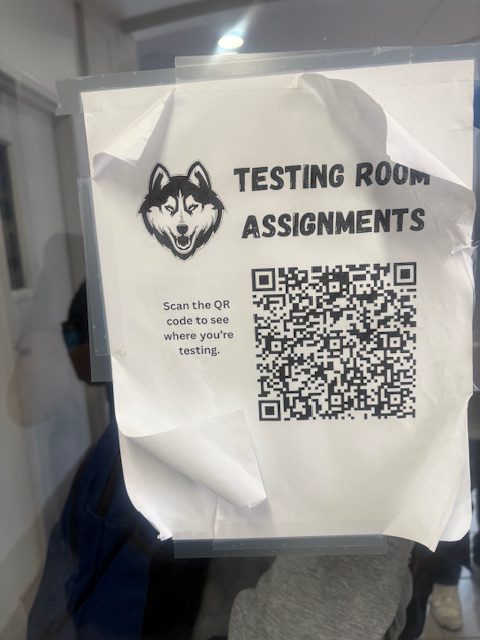
This spring, students across the district are taking the Texas English Language Proficiency Assessment System (TELPAS), a standardized test designed to measure English language learners’ progress in reading, writing, listening and speaking. While some students see it as an opportunity to demonstrate growth, others describe feeling pressure during the assessment process.
For many English learners, TELPAS is a required part of the academic year and plays a role in how schools measure language development.
“I understand why we take it,” said freshman Pablo Gill. “It helps teachers and the school see how we’re improving in English, but it’s also really nerve-racking.”
Gill said that even when he feels prepared, the testing environment can heighten anxiety.
“You want your hard work to show,” Gill said. “But the test never feels easy. When you’re sitting there, you start thinking about every mistake.”
Freshman Cesar Valdez said he also feels pressure during TELPAS and questions whether the exam fully reflects his language abilities.
“I tried my best, but I still get really anxious,” Valdez said. “It feels like so much pressure just to prove you’re good enough.”
Valdez added that some sections of the test do not always match how students use English in everyday situations.
“Some parts of TELPAS don’t feel fair because they don’t always reflect how well we speak or understand English in real life,” Valdez said. “In class, I participate and talk to my teachers, but a test can’t always show that.”
Sophomore Justin Hernandez said his perspective has changed since his freshman year. He said he now views the assessment as a tool for improvement rather than judgment.
“Honestly, TELPAS pushes you to do better,” Hernandez said. “It shows where you might need more practice.”
Hernandez said preparing for the exam helped him build confidence in academic English across subjects.
“Getting a lower score doesn’t mean you’re bad,” Hernandez said. “It means you know what to work on.”