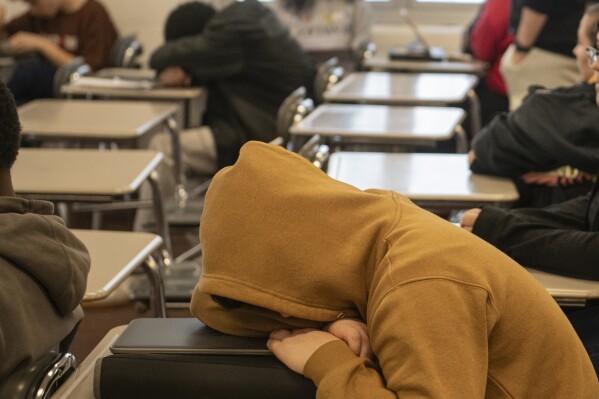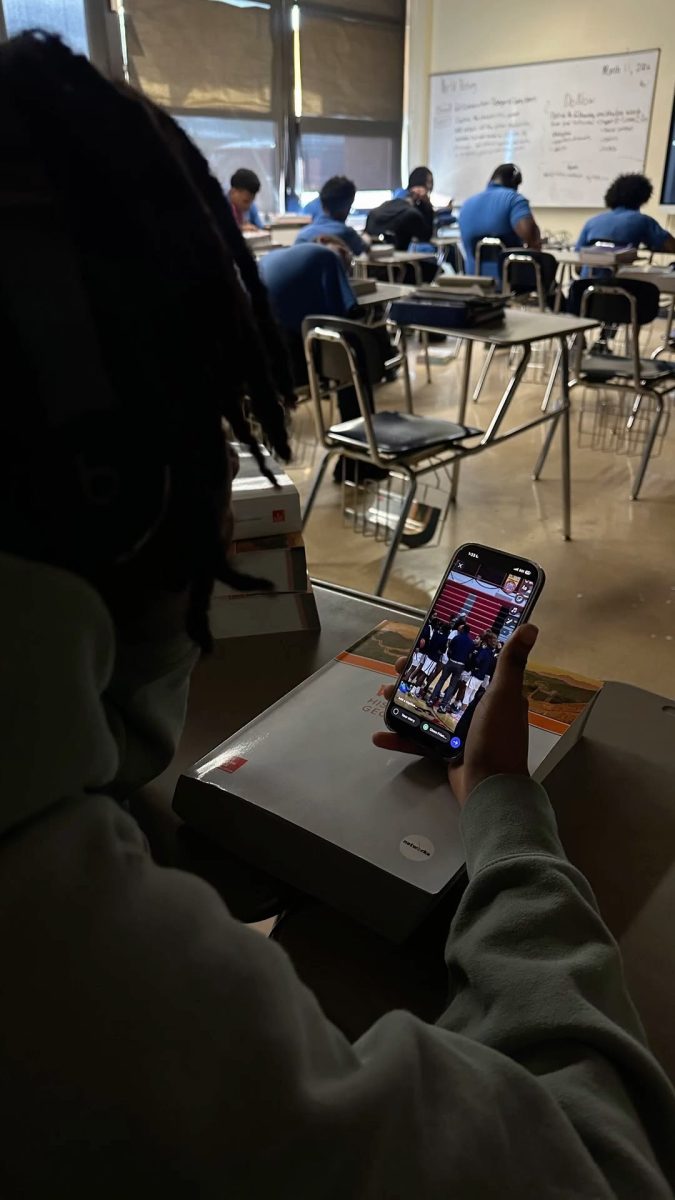
Schools across the country are continuing to crack down on phone use during class, and a new national study shows the results may be more complicated than expected. Instead of the lockable phone pouches used in the study, students at the school are required to keep their phones turned off and inside their backpacks during the school day.
The study, conducted by researchers from several universities, found that strict phone restrictions reduced phone use in schools. Teachers reported fewer distractions, and students spent less time on their devices during class.
Still, researchers found that students struggled with the change at first. Discipline issues increased during the first year, and student’s well-being dropped before improving later on.
“At first, everyone hated not being able to check their phones,” said junior Alyssa Lopez. “People were frustrated because students are so used to having their phones in their hands all day.”
Even though the adjustment was difficult, some students say the rule has helped classrooms feel more focused.
“When phones stay in backpacks, there are fewer interruptions,” said sophomore Sean Hall. “Students pay attention more instead of scrolling during lessons.”
Mr. Morgan, a english teacher at the school, said he does not think the phone rule changes every classroom dramatically, but he understands why the policy exists.
“Most students eventually follow the rule, and it keeps some distractions down,” Morgan said. “But whether students focus really depends more on the student than the phone itself.”
The study also found that phone bans did not lead to major improvements in overall test scores. High schools saw small gains in math performance, while middle schools experienced slight declines.
Some students believe the policy helps, while others think it only changes behavior temporarily.
“Students still think about their phones even if they can’t use them,” said senior Ava Martinez. “But classes do feel quieter now.”
Researchers concluded that phone restrictions may reduce distractions, but they are not a complete solution for improving grades or student behavior.